Portrait guides
From Old Family Photos to Timeless Portraits: Remembering the People We Love
Turn treasured old photos of parents and grandparents into personal oil-style portraits. Discover three artistic styles and create a free preview.
In this guide
Some photographs become more precious with every passing year. The small print tucked inside a family album might show your grandmother before you knew her, your parents on their wedding day, or two familiar faces sitting in a garden that has long since changed.
You may remember the afternoon. You may know it only through stories. Either way, a photograph can hold details that feel wonderfully personal: the tilt of a head, a favorite cardigan, the way someone smiled without quite looking at the camera.
An old picture can remain safely in its album and also inspire something new. Turning old family photos into portraits gives those faces a place in everyday life. It can be a way to remember someone who has died, celebrate parents who are still telling their stories, or make a thoughtful gift for another generation.
Giving an old photograph a new place in your home
Imagine a portrait of your grandparents beside the chair where your family gathers, or a painting inspired by your mother's younger years on her own bookshelf. The starting point is a photograph you already treasure.
With Amber Portraits, that reference guides a new digital artwork in an oil-painting style. The face and its familiar character are central, while the chosen style may reimagine the background, clothing, pose, and composition. A busy garden can become a quiet brown backdrop; an everyday snapshot can become a more formal portrait.
This is an artistic interpretation, not a faithful historical restoration of the original photograph. It does not replace the print, its handwritten date, or the story behind it. Keep those, too. The new artwork offers a different way to enjoy the person pictured, with painted color and texture chosen for the portrait.
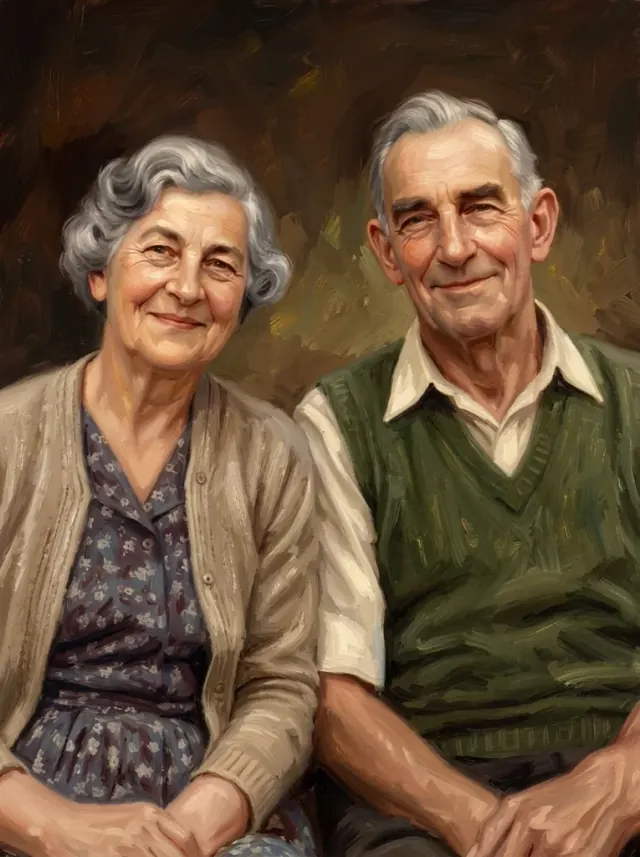
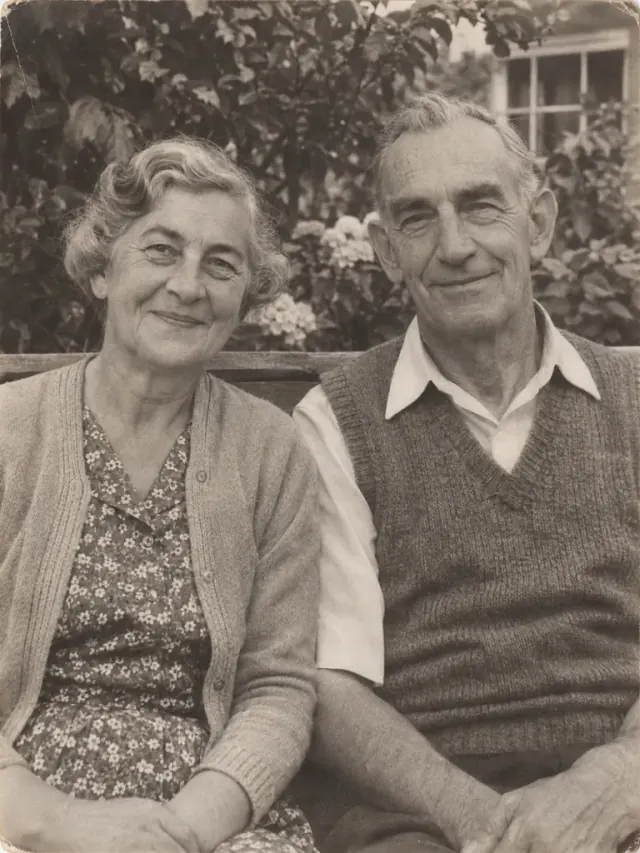
Your free preview is usually ready about one minute after upload. No account or credit card is required to preview.
What if the only photo you have is old or faded?
A photograph does not need to be recent or in color to be worth trying. A clear black-and-white picture can offer useful information about someone's eyes, face shape, and expression. Light fading, yellowed paper, or a small mark away from the face may still leave those features readable.
The important question is what you can actually see. If the eyes are lost in a dark shadow, the face is very small, or a tear crosses the mouth, a portrait may interpret those areas incorrectly. Missing details cannot be reliably recovered just because the finished picture looks convincing. Colors introduced from a black-and-white reference are also interpretations, not evidence of the original colors.
A few simple choices can help:
- Use the clearest version you can find, rather than a screenshot of a small copy.
- Photograph a paper print straight on, with even light and no glare or shadows across the face.
- Enlarge the image and check whether the eyes, smile, and outline of the face remain visible.
- If you have other clear photos of the same person, use them as additional references and compare them when reviewing the portrait.
You do not need to colorize a black-and-white photograph first. Start with what you have, and let the free preview help you decide whether it is a useful reference.
Three ways to reimagine a treasured family photo
The same photograph can suggest different kinds of artwork. Our illustrations use one couple throughout so you can compare the direction of each style. Choose according to what you want the portrait to hold onto: the faces, the setting, or the feeling of a special occasion.
Fine Art: a familiar face, beautifully remembered
Fine Art is a natural starting point for a grandmother's portrait, a grandfather's portrait, or a couple pictured together. Warm brown tones, a quiet background, and a relaxed composition bring attention to the people. The main before / after above illustrates this direction.
It suits a personal keepsake or memorial portrait when you want the face to be the first thing you notice. Clothing, pose, and background may be reinterpreted, so a familiar expression matters more than preserving every fold in a shirt. If a particular accessory is important, check it carefully in your preview.
Free Style: keep the moment, reimagined in oil
Sometimes the setting belongs to the memory. It might be a wedding photograph outside a church, a family gathering on the porch, or your grandparents' garden. Free Style uses the photograph's broader scene as the starting point for an oil-style artwork.
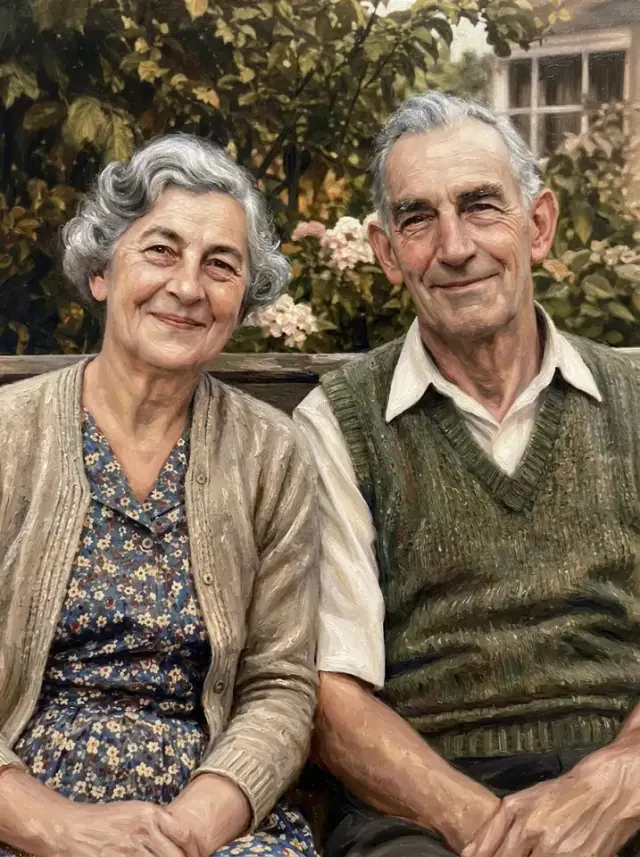
This is a useful direction when the place or shared moment matters alongside the faces. Artistic changes can still affect objects, clothing, and the arrangement of the scene; it is not a promise to preserve every detail exactly. Compare the parts that carry meaning for your family before choosing a version.
Evening Portrait: an elegant tribute
Evening Portrait offers a more formal interpretation. Everyday clothes become eveningwear, such as a gown or suit, while the composition gives the people a dignified setting.
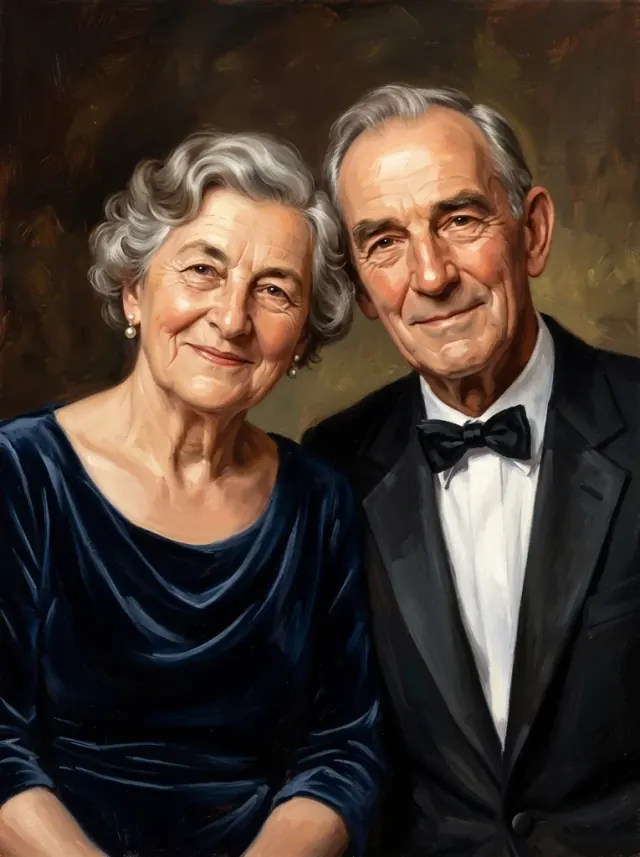
Consider it for a couple's anniversary-inspired keepsake or a family portrait that feels dressed for a celebration. The wardrobe change is part of this style, so choose another direction if preserving an original wedding dress or everyday outfit is essential to the memory.
How to make sure the portrait still feels like them
When you know a face well, small differences matter. A polished picture can still feel unfamiliar if the smile is too broad or the eyes have a different expression. For a portrait of a deceased loved one, give yourself time to look without feeling that you need to make a decision immediately.
Place the reference beside the preview and work through the details you recognize:
- The eyes, their spacing, and the expression in them.
- The shape of the face, jaw, and nose.
- The smile, including its natural asymmetry.
- The hair, age, and lines that give the face its character.
- Any glasses, jewelry, or clothing with a particular memory attached.
Artistic treatment can change these details, especially when a reference is blurred or faded. A recognizable likeness is something to judge in your own result, not assume from an example.
Make it yours, one change at a time
Your first preview is a starting point. Use Edit portrait to describe what you would like to change in everyday words. You can request changes to any part of the portrait, including the brightness, colors, facial expression, clothing, background, and composition.
For example, you might ask:
- Lighting: “Brighten their faces a little, but keep the soft shadows.”
- Colors: “Make his vest navy blue and give the background warmer tones.”
- Expression: “Make her smile more subtle, while keeping her familiar features.”
These are suggested requests to help you describe what you want. Review each new version against your reference, especially after changing an expression or facial detail.
You can make several rounds of adjustments before ordering. Start with what matters most, then refine another detail: brighten the portrait, adjust a color, or soften a smile. Compare the versions along the way and choose your favorite. If an earlier version feels more like the person you remember, you can choose that one instead. There is no need to settle on the first preview or rush the decision to buy.
A portrait to keep, display, or give
A family portrait does not need a grand setting. It might sit in a hallway you pass each morning, join a small collection of family photographs, or become a gift from siblings to a parent. A portrait inspired by your father's parents can be meaningful even if the original photograph is one he has seen hundreds of times.
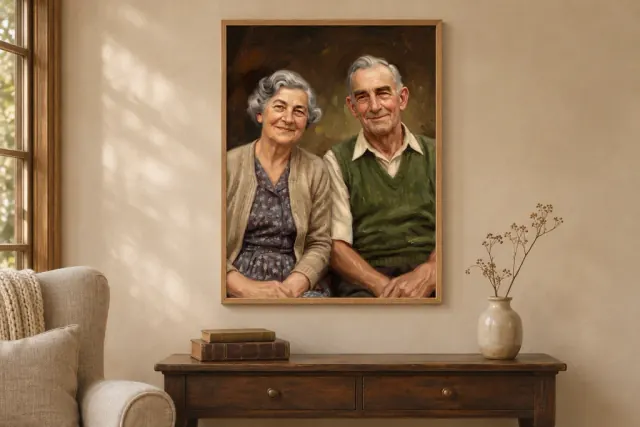
After reviewing your artwork, choose canvas, fine art paper, or a digital download. Physical portraits are prints of the digital artwork. A digital file can also be kept with your family photographs or used to arrange your own printing. Our canvas and fine art paper guide can help you compare formats.
For a gift, add a note about the photograph: where it was taken, what you remember, or why you chose it. If the portrait remembers someone who has died, consider whether the recipient would welcome it now. Their comfort matters more than a surprise.
Your family's memories deserve to be seen
The people in old photographs are part of the stories that made us who we are. Some are still here to tell us what happened just outside the picture. Others are remembered through the details we pass along.
A personal portrait can give one of those stories a new place in your home. You do not need to recreate the afternoon or find a newer photograph. Begin with an image you treasure, choose the artistic direction that suits it, and see your free preview in about a minute after upload. Then take your time adjusting the details until you find a version you want to keep.
Start with Fine Art for a warm portrait focused on familiar faces, or explore the other styles if the scene or a formal setting matters most to you.